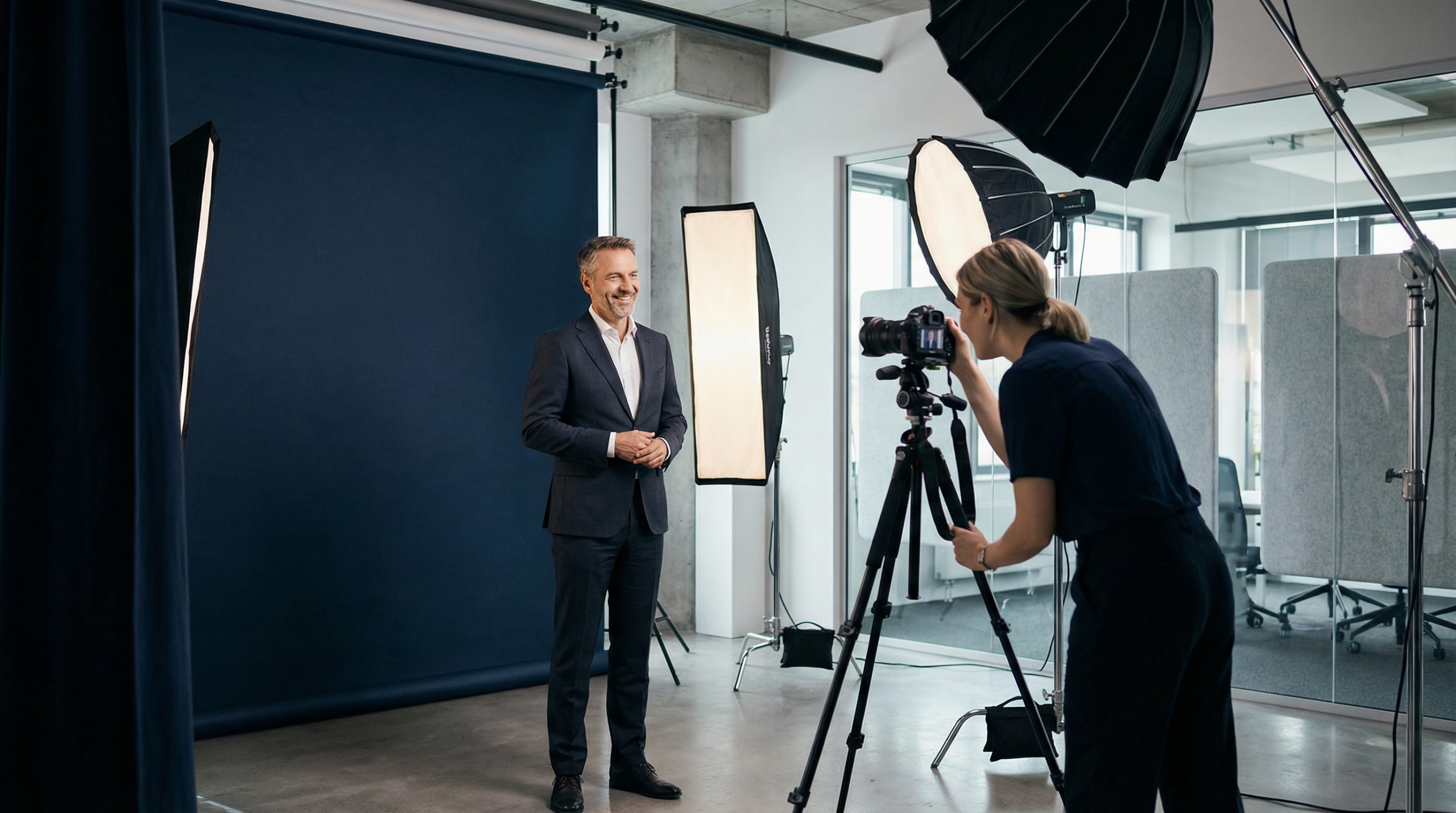
A professional headshot is not a single “look.” It is a strategic image designed to match how your industry evaluates credibility, competence, and approachability—often in a split second.
If you choose the wrong style, the issue is rarely that you look “bad.” The problem is mismatch. A headshot that works perfectly for a creative director can read as too informal for a finance executive. A clean corporate headshot can feel overly stiff for a therapist or a founder building a personal brand.
This guide will help you choose the right headshot style for your role, your industry, and the way people actually use headshots today (LinkedIn, websites, press, speaking, internal directories, and sales outreach).
Start With the Real Job of a Headshot
Before you pick backgrounds or wardrobe, be clear on what your headshot must accomplish.
A headshot should do three things:
1. Signal “I belong here.” (industry-appropriate)
2. Build trust fast. (competence + warmth in the right balance)
3. Support the action you want the viewer to take. (connect, book, hire, refer, invite)
When your headshot style aligns to your audience’s expectations, your image removes friction. When it does not, your image creates hesitation.
The 5 Headshot Style Variables That Matter
Most headshot decisions are really decisions about five variables. Once you understand them, your style becomes obvious.
1) Expression and “Approachability Level”
- Higher warmth (friendlier smile, softer eyes) works well for roles that rely on rapport: healthcare, therapy, coaching, real estate, customer success, education.
- Balanced warmth + authority works for leadership, management, attorneys, consultants.
- Higher authority (subtle smile, calm confidence) works for executive roles where decision-making and risk management matter: finance, legal leadership, enterprise sales leadership.
The goal is not “smile more” or “smile less.” The goal is: match what your clients or stakeholders need to feel in order to trust you.
2) Lighting Style
Lighting is the silent communicator of quality and professionalism.
- Soft, even lighting reads as approachable, modern, and clean.
- More sculpted lighting (stronger shadow shaping) can read as dramatic, premium, and authoritative—when done correctly.
If your industry leans conservative, prioritize clean skin tone, natural contrast, and consistency. If your industry leans creative, you can introduce more stylized lighting while still keeping it flattering and professional.
3) Background and Environment
Background choice is not aesthetic—it is contextual.
- Studio backgrounds are best when you want timeless, controlled, and universally usable images.
- Environmental backgrounds are best when context supports credibility: a professional workspace, a studio, a branded location, or a setting that reinforces what you do.
A common mistake is choosing an environmental background that competes with you. If the background is memorable, the headshot fails. You must remain the subject.
4) Wardrobe Formality
Your wardrobe should mirror what your audience expects you to wear when money, responsibility, or sensitive decisions are involved.
- Conservative roles: suit/blazer, structured wardrobe, minimal distractions.
- Modern corporate: blazer, open collar, refined neutrals.
- Personal brand roles: wardrobe aligned with your brand colors and audience tone.
5) Cropping and Usage
A headshot used for LinkedIn and internal directories is typically tight and face-forward. A headshot used for websites and speaker pages often benefits from slightly wider framing to allow design flexibility.
The best approach for most professionals is not choosing one crop—it is creating a small set of images that cover your key uses.
Industry-by-Industry Recommendations
Corporate Leadership, Finance, Banking, Consulting
What your headshot must communicate: credibility, discretion, competence, stability.
Best style choices:
- Background: neutral studio (light gray, mid-gray, or deep neutral)
- Lighting: clean and controlled; natural skin tone; minimal shine
- Expression: calm confidence; friendly but not casual
- Wardrobe: suit or blazer; structured lines; conservative colors
- Retouching: natural, understated, texture-preserving
Common mistakes:
- Trendy backgrounds that date quickly
- Overly bright smiles that read “salesy”
- Heavy retouching that looks artificial
If your work involves high-trust decisions, your image should read as consistent and dependable—not experimental.
Attorneys and Legal Professionals
What your headshot must communicate: authority, clarity, strength, trust.
Best style choices:
- Background: neutral or slightly darker studio background
- Lighting: slightly more sculpted than standard corporate (still flattering)
- Expression: composed; confident; minimal exaggeration
- Wardrobe: structured; classic; minimal pattern
Common mistakes:
- Overly casual wardrobe that undermines authority
- Harsh lighting that ages the face or deepens under-eye shadows
Legal headshots should feel “solid.” You can be approachable, but the foundation must be competence.
Real Estate, Mortgage, Insurance, Financial Advisors
What your headshot must communicate: trust + approachability + professionalism.
Best style choices:
- Background: clean studio or subtle environmental (tasteful office or neutral exterior)
- Lighting: soft, flattering, bright enough to feel welcoming
- Expression: friendly and confident; approachable eyes; natural smile
- Wardrobe: professional with a modern touch; brand-aligned color accents
Common mistakes:
- Busy backgrounds (homes, streets, cluttered offices)
- Headshots that look dated or overly formal for a relationship business
These industries live on referrals. Your headshot should look like someone people would enjoy introducing to a friend.
Healthcare, Therapy, Coaching, Wellness
What your headshot must communicate: safety, calm, empathy, credibility.
Best style choices:
- Background: soft neutral; light environment; gentle tones
- Lighting: soft, even, minimal contrast
- Expression: warm, genuine, reassuring
- Wardrobe: clean and professional; avoid aggressive patterns; comfortable polish
- Retouching: minimal; authentic texture
Common mistakes:
- Dramatic lighting that reads intense
- Stiff posing that creates emotional distance
Your audience is often anxious or vulnerable. Your image should reduce that anxiety.
Tech, Startups, Product, Creative Leadership
What your headshot must communicate: competence + modernity + approachability.
Best style choices:
- Background: modern studio tones or refined environmental workspace
- Lighting: clean and contemporary; can be slightly stylized
- Expression: confident and human; friendly without being “performative”
- Wardrobe: modern professional; well-fitted; intentional simplicity
Common mistakes:
- Overly casual clothing that reads sloppy on camera
- Trying too hard to look “creative” instead of credible
Modern does not mean informal. It means intentional.
Speakers, Authors, Executives Building Thought Leadership
What your headshot must communicate: authority, presence, and clarity at a glance.
Best style choices:
- Background: clean, timeless; minimal distraction
- Lighting: flattering; strong enough to read well at small sizes
- Expression: confident, engaging, “camera-ready”
- Cropping: include some space; create versions for banners and press use
Speakers often need a small set: LinkedIn crop, website crop, and press kit crop.
The Decision Framework: Choose Your Style in 10 Minutes
Use this quick framework to decide your style without overthinking.
Where will this headshot be used most?
- Company website/team page
- Speaker page/press kit
- Proposals, email signature, marketing
Who is the primary audience?
- Hiring manager / recruiter
- Prospective client
- Internal leadership
- Event organizer / media
What must they feel after seeing it?
- “This person is competent.”
- “This person is easy to work with.”
- “This person is premium.”
- “This person is trustworthy.”
What is the industry expectation?
Conservative / moderate / modern / creative
Choose the matching style:
- Conservative → studio neutral + classic wardrobe + restrained retouching
- Moderate → studio neutral + modern wardrobe + friendly confidence
- Modern → studio or refined environment + intentional brand cues
- Creative → environmental or stylized studio + still professional polish
Checklist: What to Bring to Your Photographer (So You Get the Right Look)
Bring this checklist to your session planning (or consultation):
- [ ] 2–3 wardrobe options aligned to your industry
- [ ] One “safe” look (timeless, neutral)
- [ ] One “brand” look (color or style aligned to your brand)
- [ ] Notes on where images will be used (LinkedIn, website, press, etc.)
- [ ] A list of 3 peers in your industry whose headshots you feel match the level you want
- [ ] Any company brand guidelines (for corporate teams)
- [ ] Your preference on retouching: natural, moderate, or conservative
FAQ
How many headshot styles do I need?
Most professionals benefit from at least two: one classic “universal” headshot and one slightly more personalized option. If you speak publicly, lead a team, or market services, a small image library is often more effective than a single final photo.
Is studio always better than environmental?
Studio is more timeless and controlled. Environmental can be excellent when it reinforces your credibility and remains visually quiet. The wrong environment is worse than a clean studio background.
How formal should I dress?
Dress one level above your daily workwear, but stay authentic to your role. The goal is “credible on your best day,” not “someone else.”
Will retouching make me look fake?
It should not. Professional retouching should preserve texture and identity while reducing temporary distractions (blemishes, stray hairs, shine). If you look like a different person, it is too much.
What if I hate being photographed?
A structured session with clear direction and feedback solves most of this. The right photographer will coach micro-adjustments that change expression and posture without making you feel posed.
If you want the simplest path: start with a timeless, industry-correct headshot that works everywhere, then add a second look that supports your personal brand or specific use cases (website, speaking, marketing).
Very professional. The photographer takes his time and does not rush the shot. The photos I have taken with him have all been quality shots, and they look very professional.
Thank you Johnny. Glad you love them.
I am not photogenic so was nervous
Going into this
He had a nice calm personality which
Made it easy and comfortable.
He is professional and efficient
Would highly recommend him.
The information Melvin has provided on his blog is very useful! Anyone who needs a professional headshot but is nervous about scheduling a session with a professional photographer and wants to ensure they will like the result once the session is done and delivered will find this information invaluable.
Thank you Wayne, trying to provide the information everyone needs to help them with their headshot to put their best face forward.
Thank you Michelle. It was great working with you.