
Most headshot disappointments are not caused by a “bad face” or being “not photogenic.” They are caused by preventable mistakes that happen before the camera ever clicks-wrong session type, wrong wardrobe, wrong expectations, or a process that does not include coaching and platform-ready deliverables.
This post covers the most common headshot mistakes professionals make and gives you practical fixes you can apply before you book and before you step in front of the camera.
Mistake #1: Booking the wrong type of headshot session
A studio headshot, a personal branding session, a corporate team program, and an actor headshot session are not interchangeable. When people book the wrong thing, they often get images that look “fine” but do not work for their actual goal.
How it shows up:
You needed a clean corporate headshot but got an overly lifestyle look.
You needed marketing imagery but only got one tight crop on a plain background.
Your company needed consistency but each person looks like they were photographed in a different year.
Fix: Before you book, define:
- primary use (LinkedIn, team page, marketing, speaking, casting)
- audience (clients, HR, recruiters, casting directors)
- outcome (credibility, approachability, authority, brand personality)
Then choose the session type that matches. Most professionals do best with either:
- a timeless universal headshot, or
- a small personal brand library (headshot + supporting portraits), or
a team consistency program if you’re a company.
Mistake #2: Comparing photographers by “number of images”
“Unlimited photos” sounds generous, but it often leads to two problems:
- weak coaching (quantity over quality), and
decision fatigue (too many near-duplicates).
Fix: Compare photographers by:
- coaching and direction
- selection process (curated proofs vs full dump)
- retouching quality
- platform-ready deliverables
A single exceptional headshot outperforms 50 average ones.
Mistake #3: Ignoring how the image will be used (platform mismatch)
A headshot can look good full-size and fail as a LinkedIn avatar.
How it shows up:
Your face is too small inside the crop.
The crop feels awkward when LinkedIn converts it to a circle.
Background brightness competes with your face at small sizes.
Fix: Ask for deliverables optimized for:
- LinkedIn (avatar-safe crop)
- website (horizontal and vertical versions if needed)
- print/press (high-resolution)
And plan composition accordingly (enough headroom, shoulders included, clean background).
Mistake #4: Wearing the wrong wardrobe for camera (or for your industry)
- Wardrobe issues are one of the most common reasons headshots feel “off.”
How it shows up:
- busy patterns create moiré (wavy distortion on camera)
- shiny fabrics reflect light and look cheap
- poor fit (tight collars, bunching jackets) looks uncomfortable
- overly trendy styling dates quickly
- wardrobe is too casual or too formal for the role
Fix: Use the “two look” strategy:
- Safe look: timeless, neutral, industry-appropriate
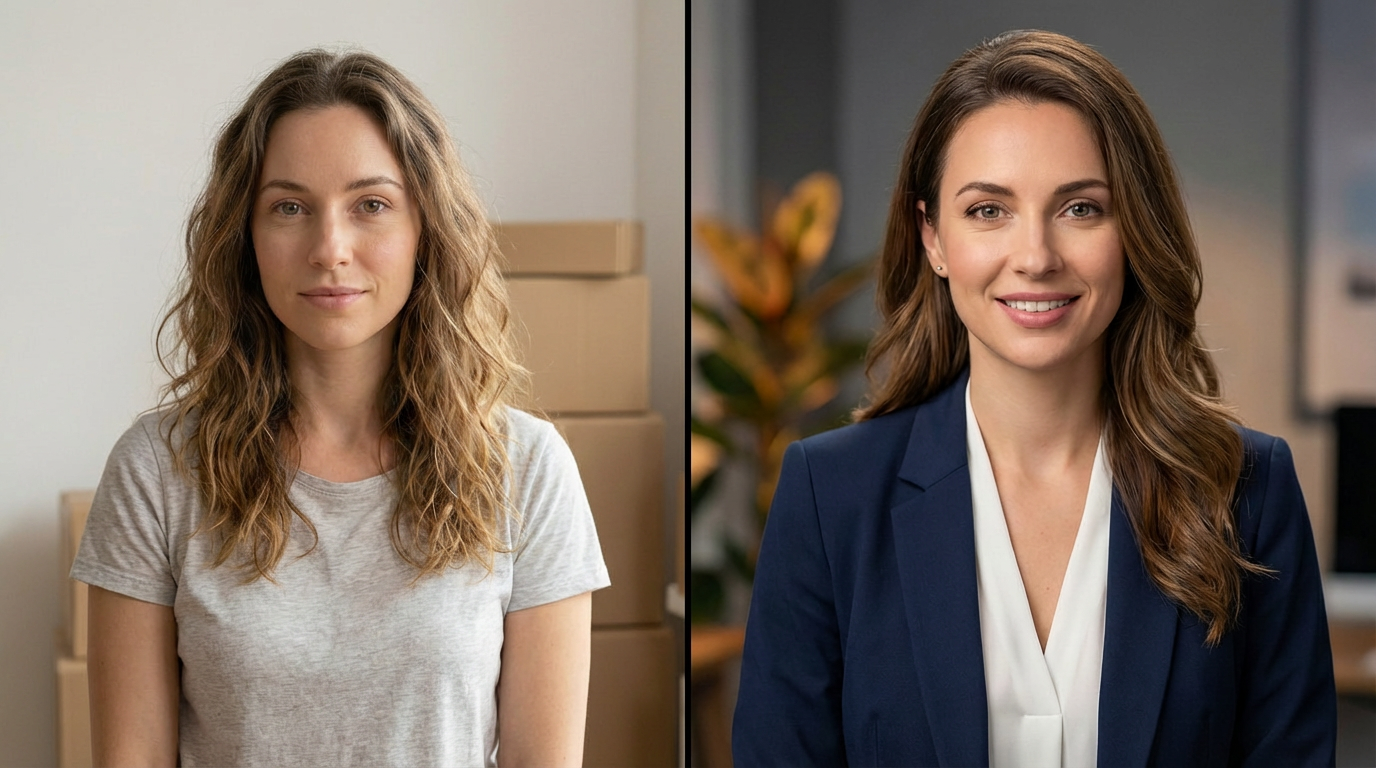
- Brand look: slightly more personality (color accent, texture, or style)
Prioritize fit, clean lines, and minimal distractions.
Mistake #5: Getting a haircut at the wrong time
This one is surprisingly common.
How it shows up:
- haircut is too fresh and doesn’t sit naturally
- hairline/edges look unfamiliar to you
- color is too strong or not blended yet
Fix: Aim for a haircut 7-10 days before the session (for most people). If you do not have much hair or you keep very short cuts, 2-4 days can be fine.
If you change style dramatically, do it earlier so you can adjust if needed.
Mistake #6: Shaving, beard shaping, or grooming too late (or too early)
Facial hair changes the shape of the face. In headshots, that is significant.
Fix:
If you shave clean: shave the morning of (or the night before if your skin is sensitive).
If you keep facial hair: shape it 24-48 hours before so it looks natural, not freshly edged.
Avoid trying a brand-new beard style the day of your session.
Mistake #7: Underestimating skin prep and shine control
Shine reads as “stress” on camera, even when you feel fine.
Fix:
- hydrate and sleep as well as possible the day before
- avoid heavy alcohol and salty foods the night before (common puffiness triggers)
- bring blotting papers or a basic matte powder option (even for men)
- choose lighting and retouching that preserve texture while controlling hotspots
A professional photographer will also manage this with lighting, not just editing.
Mistake #8: Overdoing makeup-or wearing the wrong kind for camera
Many people think “more makeup” equals “more polished.” On camera, heavy makeup can look harsh or textured.
Fix: Think “camera-ready,” not “night-out.”
- even skin tone without heavy layers
- controlled shine
- defined eyes that still look natural
- lip color that reads healthy, not loud
If you are hiring hair and makeup, tell them it is for professional headshots, not event glam.
Mistake #9: Wearing glasses without a plan
Glasses are completely workable, but glare is real.
Fix:
- make sure lenses are clean
- consider anti-reflective coating if you wear glasses daily
- tell the photographer ahead of time that glare is a concern
consider capturing both “with glasses” and “without glasses” if you switch regularly
A professional photographer will handle glare primarily through lighting angle, not by asking you to tilt your head unnaturally.
Mistake #10: Expecting retouching to solve everything
Retouching is refinement, not rescue. Over-reliance on editing often leads to plastic skin and “that doesn’t look like me” reactions.
Fix: Prioritize getting it right in camera:
- lighting that flatters and preserves skin tone
- coaching for posture and expression
- wardrobe that fits and photographs well
Then use retouching for:
- temporary blemishes
- stray hairs
- mild shine control
- subtle under-eye refinement (not removing your face structure)
Mistake #11: Choosing a background that competes with you
Busy backgrounds make your headshot feel like a snapshot.
Fix: Choose backgrounds that are:
- quiet and low-contrast
- free of bright highlights behind the head
aligned with the intended use (studio for versatility; environmental only if controlled)
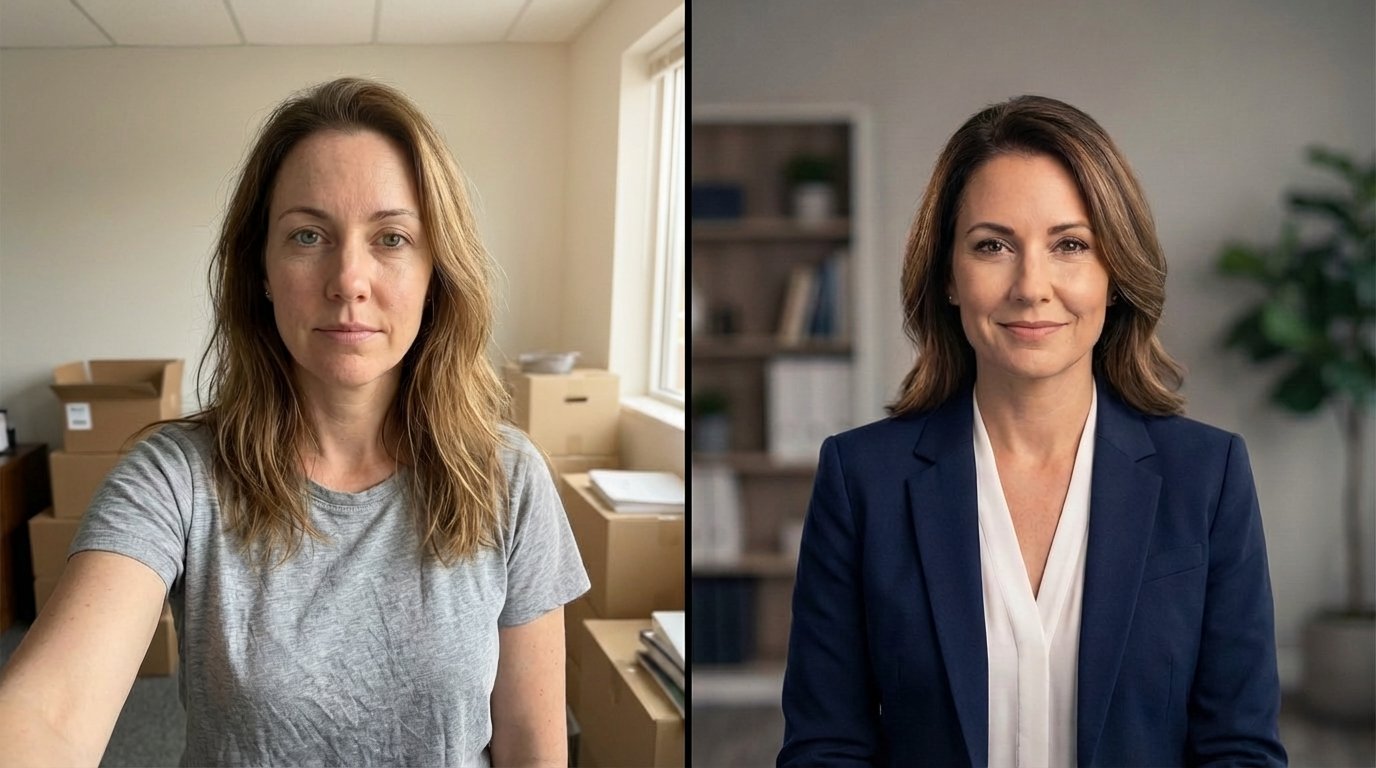
If the background is memorable, the headshot fails.
Mistake #12: Stiff posing and forced smiles
This is the most emotionally frustrating mistake because clients think it is their fault. It is usually a coaching issue.
Fix: Choose a photographer who:
- explains how they coach expression (micro-adjustments, not “just smile”)
- provides feedback during the session
- creates a comfortable pace
And on your end:
- practice a relaxed expression in a mirror briefly
- avoid “holding” a smile; let it come and go naturally
- focus on a thought that produces genuine warmth (not performance)
Mistake #13: Not planning for consistency across platforms
Professionals often end up with one headshot on LinkedIn, a different one on the company website, and a third one on a speaking bio. This inconsistency makes you harder to recognize and reduces perceived professionalism.
Fix: After your session, standardize:
- one primary image for LinkedIn and professional profiles
- one image for website usage (if different crop is needed)
- optional supporting images for marketing
Consistency is a quiet trust builder.
Mistake #14: Waiting too long to update
A headshot that no longer resembles you is a credibility leak.
Fix: For many professionals:
- update every 2-3 years
For public-facing roles (sales, leaders, entrepreneurs):
- every 12-24 months
For actors:
- every 6-12 months or after major changes
If you have had a role change, appearance change, or brand change-update sooner.
- The “pre-book” checklist (do this before you schedule)
Use this checklist to avoid most mistakes automatically:
- Define primary use (LinkedIn, website, marketing, press, casting)
- Choose session type that matches (universal / brand library / team program)
- Confirm coaching + selection process (not just shooting)
- Confirm platform-ready deliverables (LinkedIn crops + web + high-res)
- Plan wardrobe: safe look + brand look
- Schedule grooming timing: haircut 7-10 days, facial hair 24-48 hours
- Prepare shine control and glasses plan if needed
- Set update cadence (don’t let it drift 5+ years)
- FAQ (schema-friendly)
What’s the single biggest mistake people make with headshots? Booking a session that does not include coaching and a clear selection process. Without that, you are relying on luck rather than a repeatable system.
Is it better to do studio or environmental headshots? Studio is most versatile and easiest to keep consistent. Environmental can be powerful for personal branding if the background is controlled and quiet.
How do I avoid looking stiff? Work with a photographer who coaches posture and micro-expressions and gives real-time feedback. Stiffness is usually a direction problem, not a “you” problem.
Can retouching fix a bad headshot? Not reliably. Retouching can refine, but it cannot replace good lighting, flattering posture, and a natural expression.
Ready to Get Started?
If you want the easiest path to a confident session, start with a clear wardrobe and prep checklist-most headshot mistakes are prevented before you arrive.
If you want headshots that look current, feel like you, and work across LinkedIn and your website, book a consultation and we’ll plan the right session type, wardrobe approach, and deliverables for your role.
Book a Consultation | View Session Options & Pricing | See the Portfolio