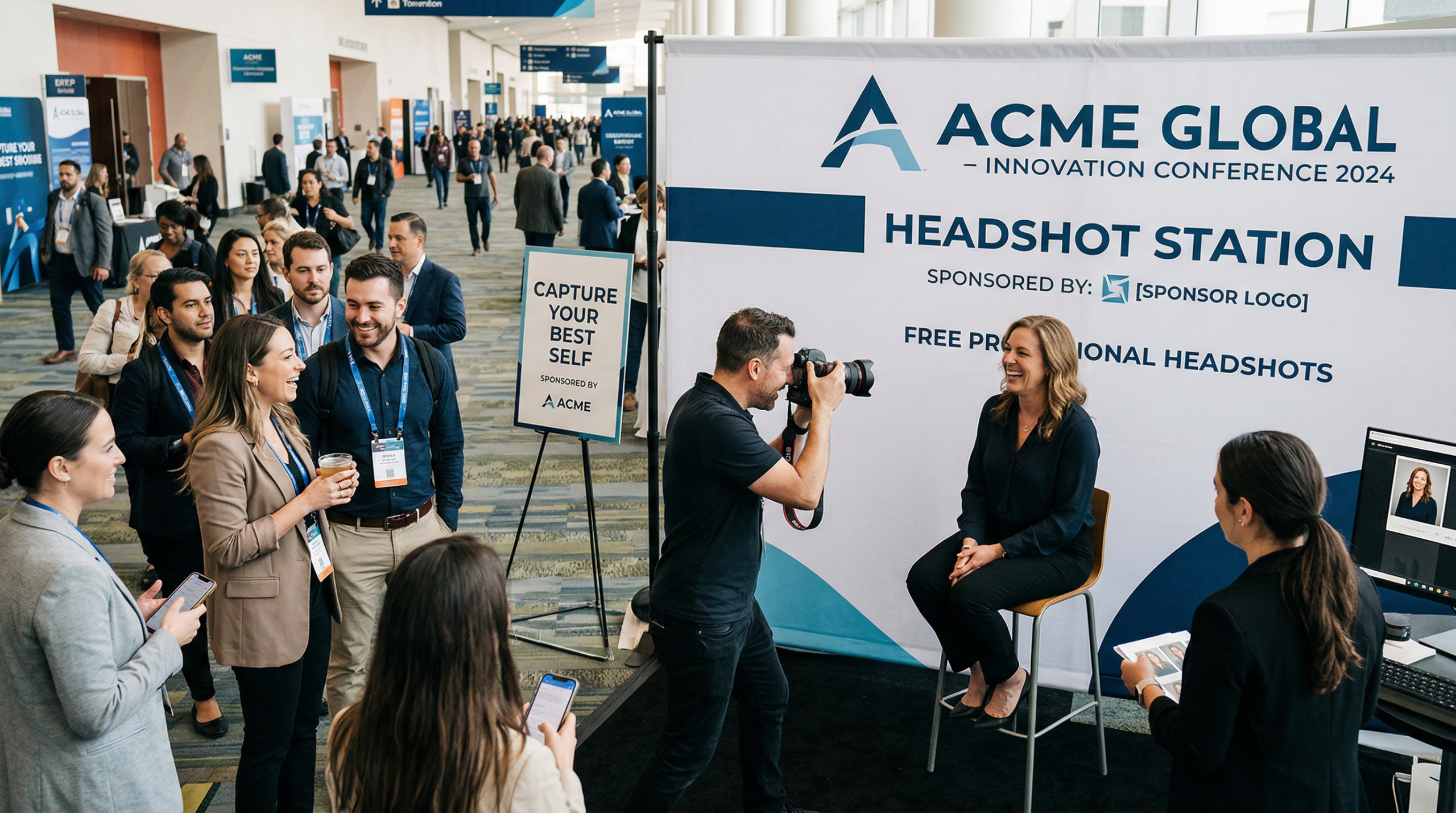
Sponsors want visibility, but visibility alone is a weak promise.
At many conferences and corporate events, sponsorship is still built around passive exposure: logos on signage, logos on slides, logos on tote bags, logos on email banners, logos on lanyards. Those placements can have value, but they often blur together. Attendees notice them briefly, then move on.
That is why many organizers and sponsors are looking for something stronger than logo placement alone. They want a sponsorship opportunity that feels useful, visible, and memorable.
A conference headshot station can do exactly that.
When done well, it becomes more than a photography setup. It becomes a sponsor-backed attendee experience that creates goodwill, increases engagement, supports the event’s value proposition, and gives the sponsor a more meaningful presence on-site.
Why passive sponsorship often falls flat
Passive sponsorship is easy to sell because it is simple to package.
A sponsor gets logo placement. The organizer fulfills the agreement. Everyone can point to visible branding and say the sponsor was included.
The problem is that inclusion is not the same as impact.
Most attendees do not form a strong memory around a logo on a slide or a name printed on a banner unless it is tied to something useful or emotionally relevant. Passive branding may create recognition, but recognition by itself rarely creates appreciation.
That is the weakness in many sponsorship packages. They offer exposure without engagement.
In a crowded conference environment, that is usually not enough.
What sponsors really want
Most sponsors want a stronger return than “your logo was displayed.”
They want to be associated with something attendees notice, appreciate, and remember. They want a presence that feels active rather than background noise. They want an activation that helps justify the sponsorship investment and supports future renewal conversations.
That does not always mean they need something flashy. In fact, flashy is often overrated.
What works better is usefulness.
When a sponsor helps provide something attendees genuinely value, the sponsor becomes part of a positive experience rather than just part of the visual clutter. That changes how the brand is perceived.
A conference headshot station fits this well because it offers a professional benefit attendees can actually use.
Why a headshot station creates stronger sponsor value
A conference headshot station gives attendees something personal, practical, and professionally relevant.
That matters because it changes the sponsor relationship from:
“Here is our logo”
to:
“We helped provide something useful.”
That is a much stronger association.
Attendees are more likely to remember the sponsor when the sponsor is connected to a service they appreciated. The value feels concrete. The sponsor is no longer just present at the event. The sponsor is helping create one of the event’s most useful experiences.
That is especially powerful at conferences where attendees care about:
- networking
- professional visibility
- LinkedIn presence
- recruiting
- leadership growth
- speaking opportunities
- career advancement
A polished headshot aligns naturally with those goals.
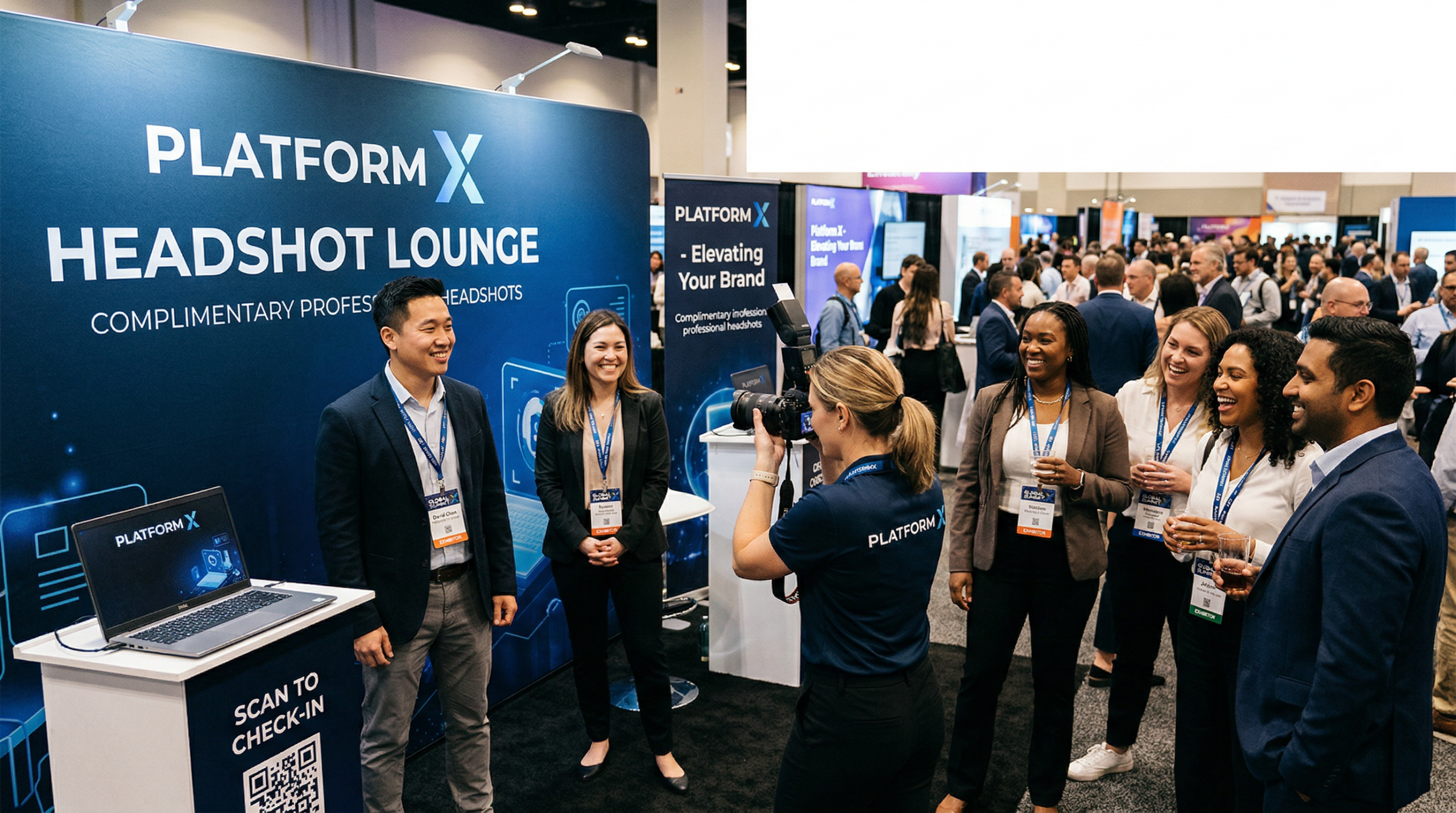
What sponsor value actually looks like
Sponsor value from a headshot station is not limited to a logo on a backdrop.
It can show up in several ways:
- association with a high-value attendee benefit
- stronger on-site visibility
- increased traffic near a sponsor area
- better attendee goodwill
- stronger conversation starter for sponsor representatives
- more memorable sponsorship positioning
- a more compelling story for sponsor recap conversations
That last point is important.
Sponsors are often evaluating not just whether they were seen, but whether their presence felt worthwhile. A headshot station gives organizers and sponsors a more meaningful story to tell after the event: attendees used it, appreciated it, talked about it, and connected the positive experience to the sponsor.
That is much more persuasive than simply reporting that a logo appeared in several places.
Why attendees respond well to sponsor-backed headshots
Attendees tend to respond well to headshot stations because the benefit is obvious.
They do not have to be convinced that a stronger professional photo has value. Most already understand that. The real barrier is usually time, not interest. People know they need a better photo, but it keeps getting postponed.
When an event makes that easy, the benefit feels immediate.
And when the headshot station is sponsor-backed, the sponsor gets credit for helping provide something useful without needing to force the interaction. That is one reason this kind of activation can feel more natural than traditional booth engagement. It invites participation through value instead of pressure.
That difference matters.
A sponsor interaction that feels useful is generally stronger than one that feels promotional.
Why organizers benefit too
This is not just good for sponsors. It is also good for organizers.
A headshot station can make the sponsorship package more attractive because it gives organizers something concrete to sell beyond logo placement. It strengthens the event’s attendee-value story and helps the sponsor package feel more modern and experience-based.
That can support:
- stronger sponsor conversations
- improved event differentiation
- higher perceived attendee value
- better integration of sponsor presence into the actual event experience
In other words, the organizer is not just selling space. The organizer is selling a meaningful activation.
That is a better sponsorship conversation.
Smart ways to integrate sponsor branding
This is where restraint matters.
A sponsor-backed headshot station should not feel like a hard sell wrapped around a photo. If the branding is too aggressive, the experience can feel transactional and lose the goodwill it was supposed to create.
The strongest integrations are usually tasteful and clear.
Examples include:
- “Headshots sponsored by [Sponsor Name]”
- clean sponsor signage near the station
- sponsor mention in pre-event marketing
- sponsor inclusion in event app listings or schedules
- sponsor adjacency if the station is placed near a booth or activation zone
- sponsor mention in delivery messaging, where appropriate
The point is to create positive association, not visual overload.
Good branding supports the experience. It should not dominate the experience.
What makes the sponsorship activation actually work
A headshot station only creates real sponsor value if the attendee experience is good.
That means the operational side matters as much as the branding side.
For the activation to work well, it typically needs:
- clear signage
- visible placement
- efficient queue flow
- fast, confident subject coaching
- polished lighting and setup
- realistic throughput expectations
- clear communication on image delivery
If the line is chaotic, if the setup looks improvised, or if attendees do not understand what happens next, the sponsor value drops. The sponsor may still be visible, but the association is no longer with usefulness. It becomes associated with friction.
That is why sponsor value is not created by branding alone. It is created by branding plus execution.
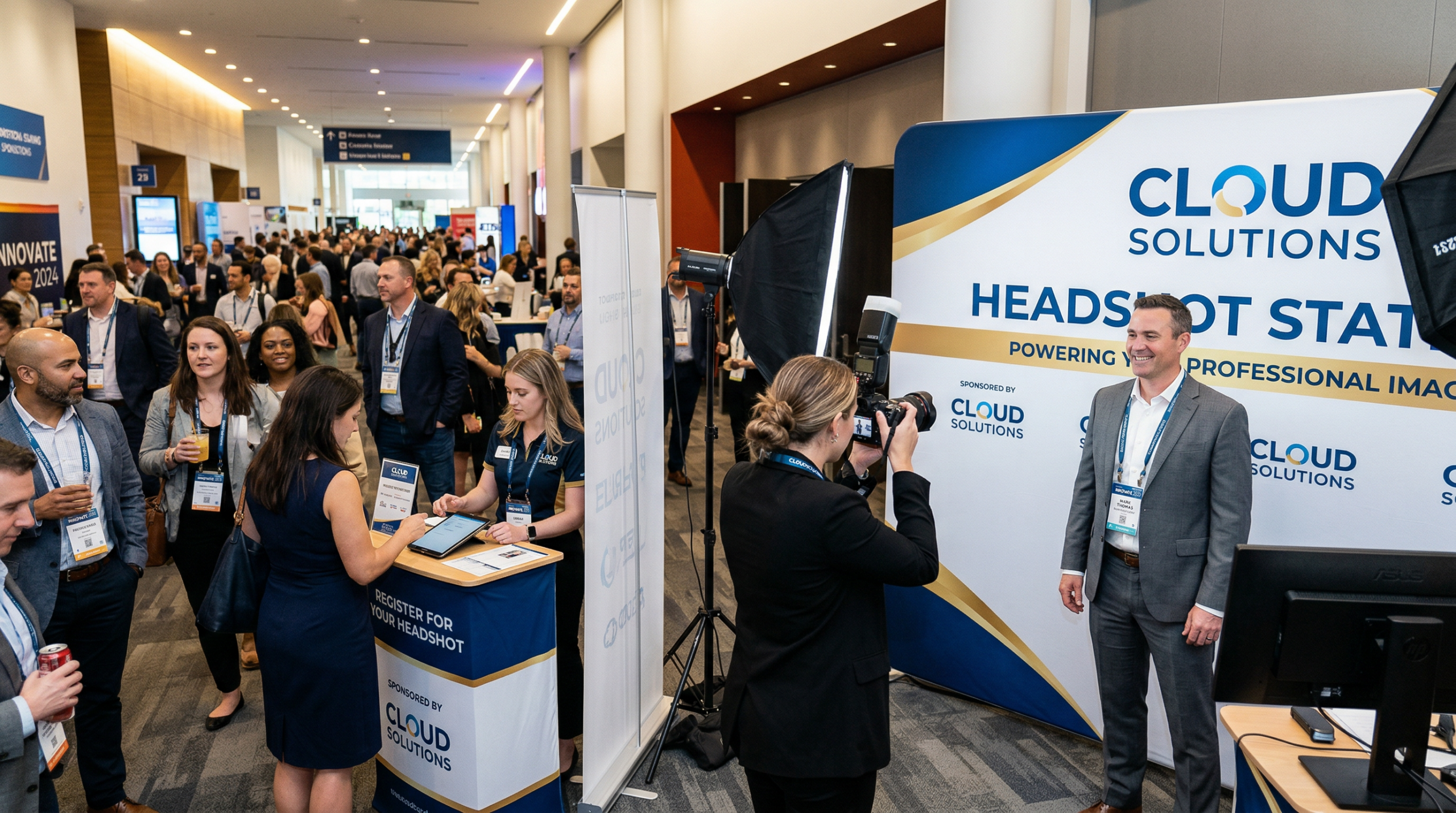
Mistakes that weaken sponsor value
There are several common mistakes that reduce the impact of a sponsor-backed headshot station.
One is overbranding. Too much sponsor branding can make the station feel more like an ad than a benefit.
Another is poor placement. If the station is hidden, awkwardly located, or disconnected from attendee flow, it loses visibility and engagement.
A third is unclear expectations. If attendees do not know who it is for, how long it takes, or how images will be delivered, the experience feels confusing rather than helpful.
And a fourth is overselling outcomes. Organizers should be careful not to promise hard metrics they cannot truly support. A headshot station can increase goodwill, improve sponsor visibility, and create stronger engagement, but it should not be sold with inflated claims.
Strong sponsor value comes from usefulness, experience quality, and smart positioning. Not hype.
The kinds of events where this works best
Sponsor-backed headshot stations are especially strong for:
- association conferences
- leadership events
- recruiting events
- trade shows
- professional development conferences
- membership organizations
- women’s leadership events
- networking-heavy conferences
- B2B events where attendees care about professional presence
In those environments, the benefit feels aligned with attendee priorities. That makes sponsor integration feel natural rather than forced.
A better sponsorship question
Instead of asking:
“Where can we put the sponsor logo?”
A better question is:
“What can the sponsor help provide that attendees will appreciate?”
That shift leads to stronger sponsorship design.
It moves the relationship away from passive exposure and toward meaningful participation in the event experience. A headshot station is powerful because it answers that question with something concrete, useful, and professionally relevant.
Final thought
A conference headshot station creates real sponsor value when it does more than display a logo.
It gives attendees something they genuinely want. It helps sponsors associate their brand with usefulness and professionalism. It helps organizers offer a more engaging sponsorship opportunity. And it turns sponsorship from passive exposure into a positive event experience.
That is why a well-run headshot station can be one of the most effective sponsor activations at a professional conference or corporate event.
If you are looking for a sponsor activation that offers more than logo placement and gives attendees something they will actually use, let’s talk about building a conference headshot station for your next event.
Explore More
- Why Conference Headshots Outperform Cheap Swag at Corporate Events — LIVE BLOG URL PENDING
- What Makes an On-Site Headshot Station Run Smoothly at a Conference — LIVE BLOG URL PENDING
- Conference Headshots / Event Headshot Stations