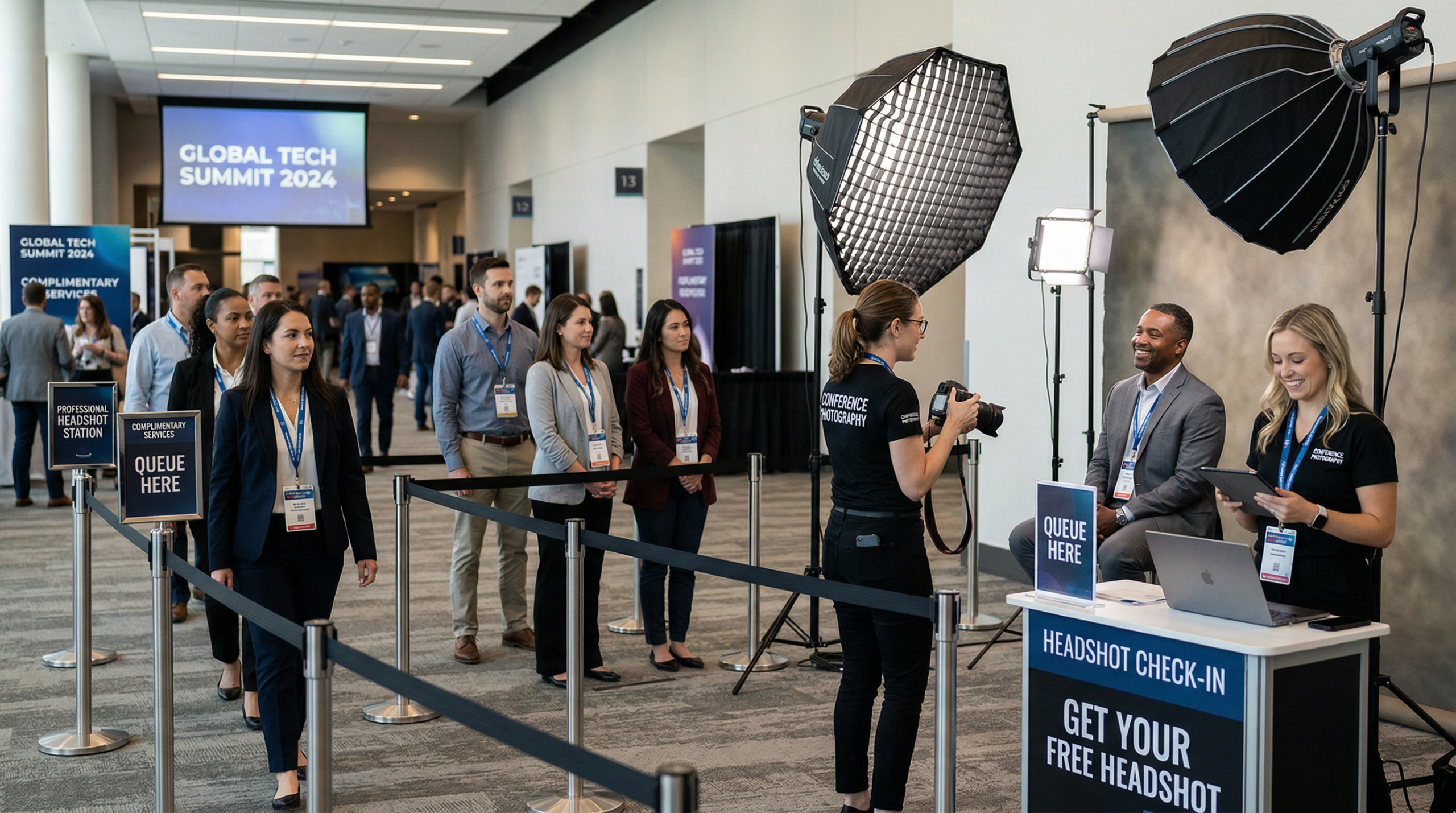
A conference headshot station can look simple from the outside.
A backdrop, a camera, a few lights, a line of attendees, and a photographer creating polished images on-site. To attendees, it often feels quick and effortless. That is exactly how it should feel.
But a smooth headshot station does not happen by accident.
What makes it successful is not just good photography. It is good planning, good flow, clear communication, and an experience designed to work inside the pace and pressure of a live event. When those pieces are in place, the station feels polished, useful, and easy to participate in. When they are not, even a well-intentioned setup can become slow, confusing, or underused.
For event planners, sponsors, and organizers, this matters. A headshot station should add value without creating friction.
A smooth station starts with the right purpose
The first mistake many planners make is treating the headshot station as just another table to place on the floor plan.
It is more than that.
A conference headshot station is an attendee-facing activation. It needs to be planned around experience, not just square footage. Before choosing a location or discussing equipment, the event team should be clear about what the station is supposed to accomplish.
Is it meant to create attendee value?
Support sponsor activation?
Drive traffic near a certain area?
Serve a recruiting or networking event?
Offer a premium conference perk?
The answer affects how the station should be placed, staffed, promoted, and managed.
A smooth setup starts when the purpose is clear.
Location matters more than many people expect
Even a well-run station can struggle if it is placed in the wrong part of the venue.
The ideal location is visible and accessible without blocking traffic. Attendees should be able to notice it easily, understand what it is, and approach it without creating congestion in a doorway, hallway, or registration bottleneck.
A good location usually has:
- natural attendee flow nearby
- room for a small queue
- enough space for clean setup and movement
- visual separation from heavy foot traffic
- reasonable control over background clutter
- practical access to power if needed
A bad location can create problems fast.
Too hidden, and the station gets overlooked. Too exposed, and the line becomes disruptive. Too cramped, and the experience feels rushed or chaotic. Too close to loud or crowded event activity, and both communication and photography quality can suffer.
The best placement feels visible, professional, and easy to approach.
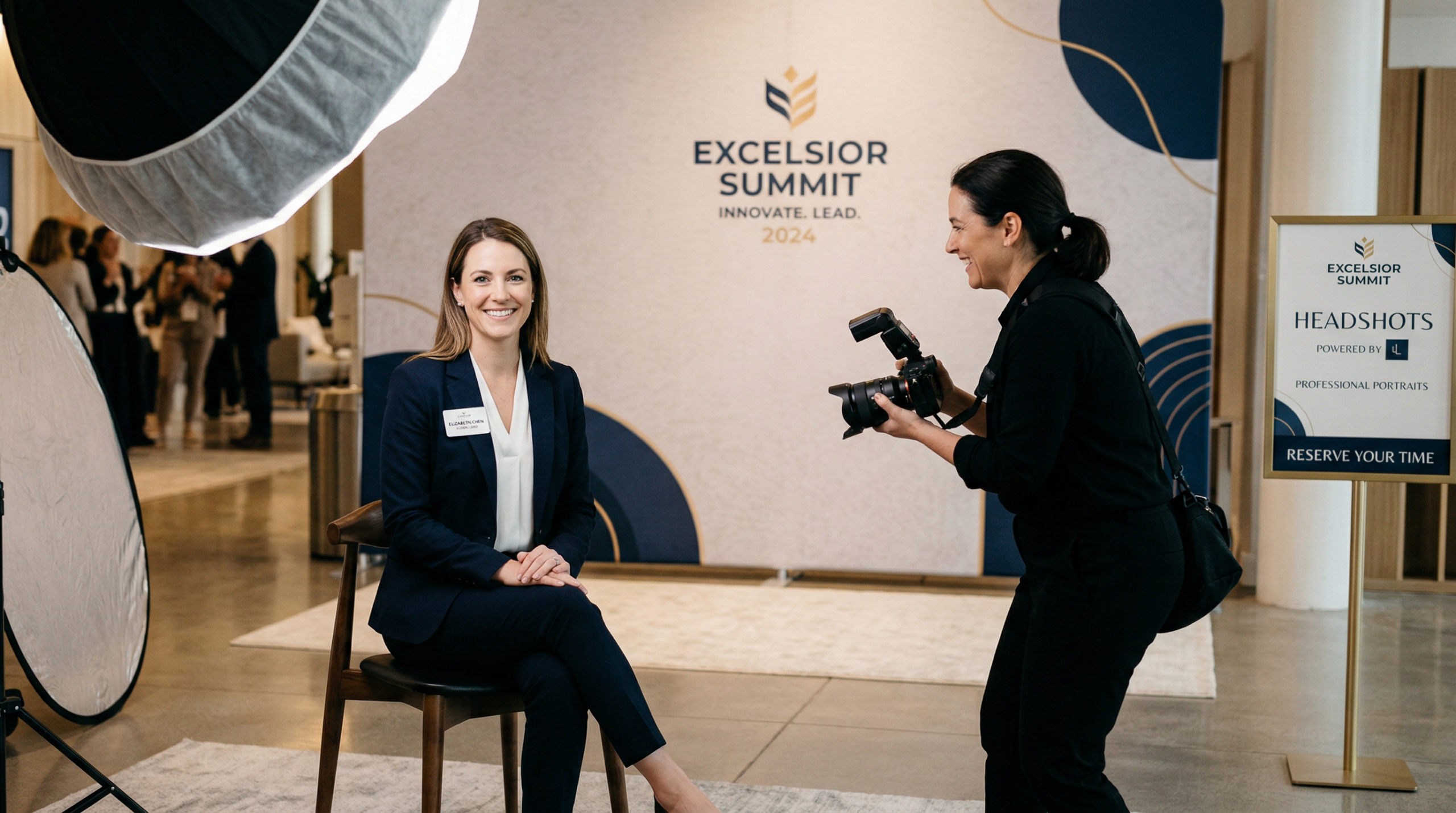
The setup should look clean, not complicated
Attendees do not need to understand the lighting diagram. They just need to feel confident that the station is professional.
A clean, polished setup creates trust quickly. It tells people this is worth stopping for.
That usually means:
- a simple, professional background
- consistent lighting
- a compact footprint
- minimal clutter
- equipment placed with intention
- a visually organized working area
Complicated setups can create the impression that the process will take too long. Messy setups can reduce confidence before the first photo is ever made.
The goal is not to impress attendees with gear. The goal is to create a station that feels credible, efficient, and welcoming.
Clear attendee flow is critical
One of the fastest ways for a headshot station to become frustrating is unclear flow.
If attendees do not know where to stand, where to wait, whether they need to sign up, how long it takes, or what happens after the photo, hesitation starts immediately. A few uncertain moments can slow the line and make the activation feel less polished than it really is.
A smooth station usually has a clearly understood sequence:
- attendee notices the station
- attendee understands whether it is first-come, scheduled, or sponsor-supported
- attendee knows where to wait
- attendee steps in for the session
- attendee receives direction quickly
- attendee understands how and when images will be delivered
That sounds obvious, but many event activations fail because one or more of those steps is vague.
Flow does not need to be complicated. It needs to be visible and easy.
Fast coaching makes a huge difference
A good conference headshot is not only about technical quality. It is also about how quickly the photographer can help a person look confident and natural.
This matters because many attendees do not arrive feeling camera-ready. Some are rushed. Some are self-conscious. Some have not had a professional photo in years. Some think they are “bad in photos.” If the process feels stiff or uncertain, the station slows down and the result often suffers.
Fast, confident coaching solves that.
A smooth headshot station depends on the ability to guide people quickly on:
- posture
- angle
- expression
- eye line
- body position
- small adjustments that improve confidence on camera
This is where portrait skill matters. Not every event photographer is built for fast, flattering subject direction. Conference headshots require both efficiency and people skills.
When attendees feel guided well, the station moves better and the final images look stronger.
Signage removes uncertainty
Good signage does a lot of hidden work.
It tells people what the station is, who it is for, how it works, and why they should stop. It also reduces the number of repetitive questions that slow the process.
Useful signage may include:
- what the station offers
- sponsor language if relevant
- whether the station is free, included, or limited
- approximate time per person
- how image delivery works
- whether there is a sign-up or line
- any simple eligibility or timing note
This does not need to be overdesigned. It just needs to be clear.
Without signage, attendees rely on guesswork. Guesswork creates hesitation, and hesitation reduces participation.
Delivery expectations must be clear
This is one of the most overlooked parts of the experience.
Attendees need to understand what they are getting and when they will get it. If that is vague, the event may produce strong images and still leave people frustrated.
A smooth station sets expectations early:
- Are attendees receiving one final image or multiple?
- Is the image lightly polished or fully retouched?
- Will delivery happen same day, next day, or later?
- Is delivery by email, gallery, or download link?
- Do attendees choose on-site or receive a selected final image afterward?
These details affect perception.
Clear delivery communication makes the station feel professional and trustworthy. Unclear delivery communication makes the experience feel incomplete, even if the photography itself was excellent.
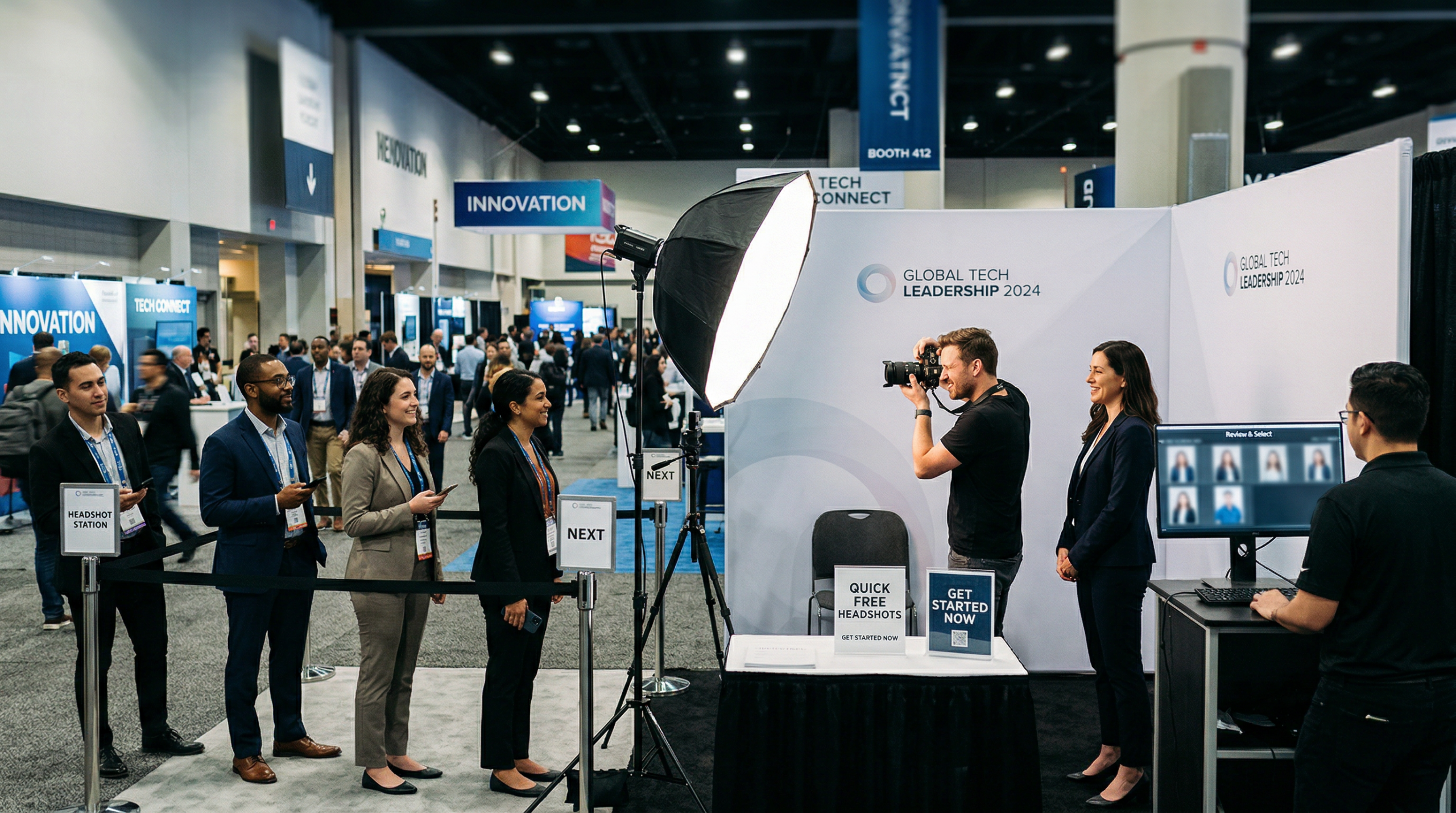
Staffing and support affect throughput
Many people think the photographer alone determines whether the station runs well. That is only partly true.
At some events, a station runs far better when there is support for:
- check-in
- line management
- sponsor communication
- attendee questions
- keeping the flow moving
Not every event needs additional staffing, but many benefit from it. The more active or high-volume the event, the more important support becomes.
If the photographer has to handle photography, coaching, line questions, logistical confusion, and sponsor explanations all at once, the experience can slow down quickly.
A smooth station protects the photographer’s focus while keeping attendees informed.
Realistic throughput is better than overpromising
This is where planners need honesty.
A headshot station should be positioned as efficient, but not magical. Overpromising how many people can be photographed in a given time can create disappointment for everyone involved.
Throughput depends on:
- event pace
- attendee readiness
- setup style
- whether images are reviewed on-site
- how much coaching each person needs
- whether there is additional check-in or sponsor interaction
A realistic estimate is always better than a sales-driven guess.
When the pace is planned honestly, the station feels calm and well-run. When numbers are inflated, the line gets long, attendees get impatient, and the value of the activation starts to erode.
Promotion before the event helps the station succeed
A smooth experience starts before the event opens.
When attendees know in advance that conference headshots will be available, participation tends to be stronger and more intentional. Pre-event awareness helps people plan their time, prepare their appearance, and look forward to the activation.
This can be supported through:
- registration communications
- event agenda mentions
- sponsor announcements
- conference app listings
- event emails
- signage on-site
A headshot station should not be treated like a surprise detail hidden in the corner. If it is valuable, it should be communicated as part of the event experience.
Common mistakes that make a station feel rough
Most headshot station problems come from planning errors, not photography errors.
Common issues include:
- poor location choice
- confusing line or check-in process
- unclear signage
- unrealistic throughput expectations
- no communication about delivery
- too much clutter around the station
- weak coaching
- no support for attendee questions
- sponsor integration that feels forced or distracting
None of these problems are inevitable. They are usually preventable when the setup is planned with attendee experience in mind.
Why experience matters
Conference headshots are not the same as studio headshots, and they are not the same as general event coverage.
They sit in between.
The photographer needs to create flattering, professional portraits while also working inside the time pressure, foot traffic, noise, and unpredictability of a live event. That takes more than technical ability. It takes calm execution, people management, quick adaptation, and a clear process.
That is why experience matters.
When the station is run by someone who understands both portrait quality and event flow, the experience feels easier for everyone involved.
Final thought
A smooth on-site headshot station is built, not improvised.
It depends on clear purpose, smart location, clean setup, visible flow, confident coaching, realistic expectations, and good communication from start to finish. When those elements are in place, the station feels polished and valuable rather than disruptive or complicated.
That is what organizers want.
That is what sponsors want.
And that is what attendees respond to.
Plan a Smooth Conference Headshot Station
If you are planning a conference or corporate event and want a headshot station that feels polished, efficient, and easy for attendees to use, let’s talk about the setup that fits your event.
Explore More
- → Conference Headshots vs. Event Coverage: What’s the Difference and Do You Need Both? — LIVE BLOG URL PENDING
- → How a Conference Headshot Station Creates Real Sponsor Value — LIVE BLOG URL PENDING
- → Conference Headshots / Event Headshot Stations